














# A Molecule That Changed History: How Phenol Reshaped Modern Medicine and the Materials Industry
# 1. Abstract
In the course of modern civilization, phenol (Phenol) is an underestimated yet decisive substance. Initially it was merely industrial waste embedded in foul-smelling coal tar (Coal Tar), yet it profoundly redrew the landscapes of medicine and industry. Before Joseph Lister brought it into the hospital ward, surgery was little different from a game of “Russian roulette” against infection; outside medicine, as a cornerstone of phenolic resins, it opened the curtain on the twentieth-century plastics era and, at the billiard table, unexpectedly helped maintain a balance between elephant survival and human entertainment. This paper explores how phenol evolved from a humble chemical by-product into a key node that changed human survival rates and the trajectory of resource consumption.
# 2. Discovery History and Chemical Background
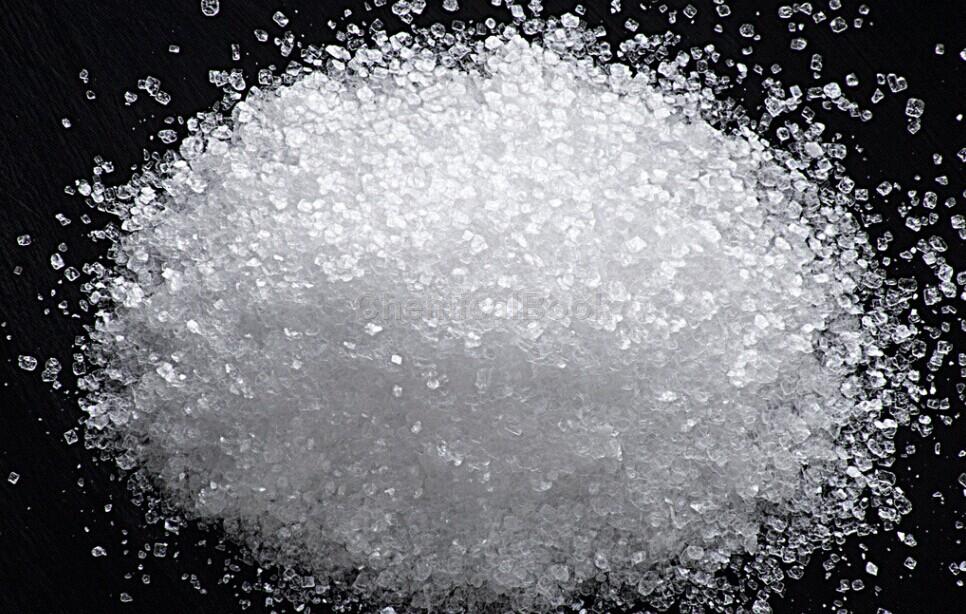
Phenol began from a lowly origin. In the early nineteenth century, gas streetlights spread across London, and gasworks produced large amounts of a foul, viscous by-product—coal tar (Coal Tar)$^{[1]}$—when coal was gasified. In 1834, the German chemist Runge (Friedlieb Ferdinand Runge) successfully isolated colorless, needle-like crystals from this municipal headache of industrial waste and named the substance “carbolic acid” (Carbolic Acid).
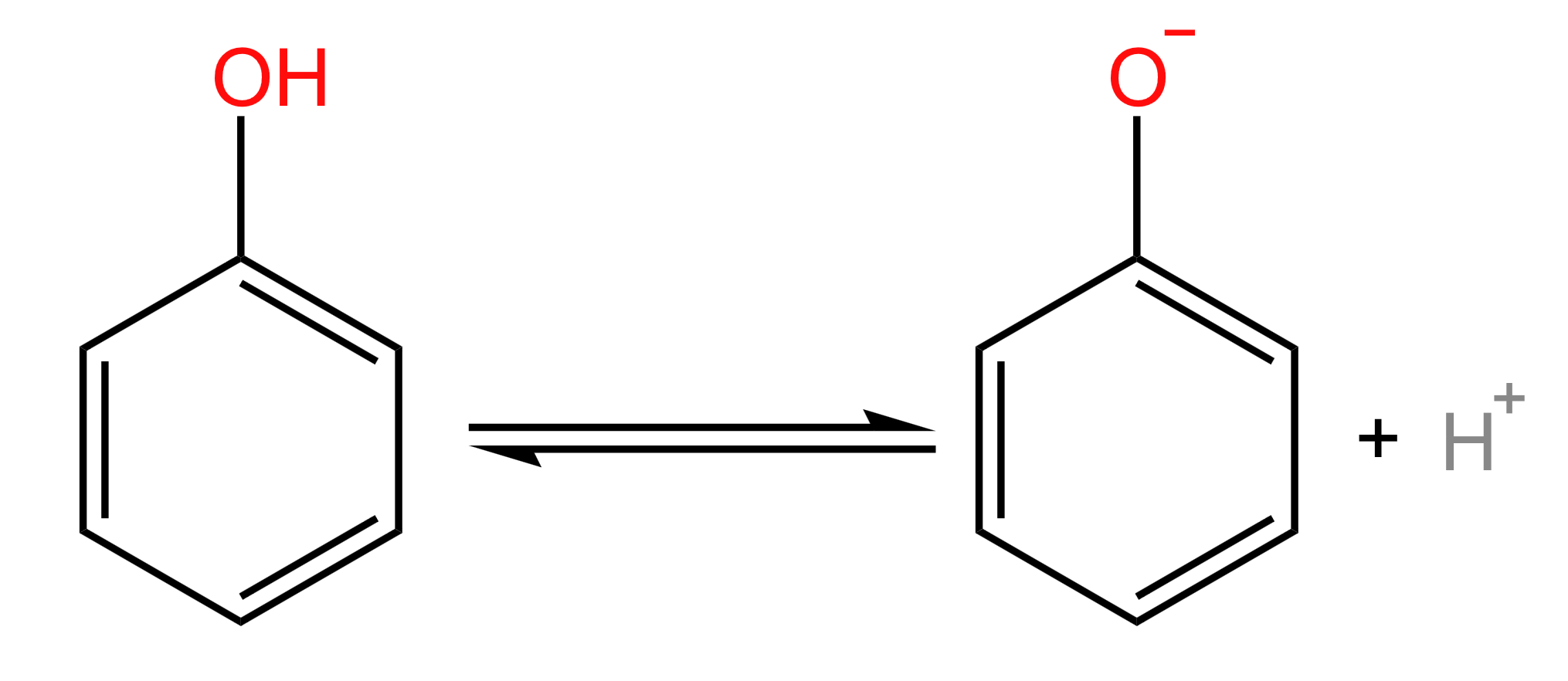
From a structural perspective, phenol has the molecular formula $C_6H_5OH$ and is not complex: it consists of a planar benzene ring directly bonded to a hydroxyl group (Hydroxyl Group). In aqueous solution, phenol undergoes slight ionization and therefore behaves as a weak acid:
$$C_6H_5OH \rightleftharpoons C_6H_5O^- + H^+$$
Its pKa generally lies between 9.89 and 10.00:
$$pKa(C_6H_5OH) = 9.89 \sim 10.00$$
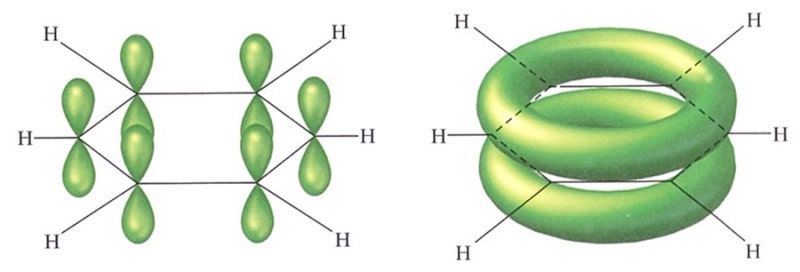
This simple molecular combination endows phenol with highly reactive chemical behavior. The delocalized $\pi$ bond (Delocalized $\pi$ Bond) formed between the phenolic hydroxyl and the benzene ring produces a pronounced electron-donating effect (Electron-donating Effect), greatly increasing the electron density (Electron Density) of the ring and making electrophilic substitution reactions more facile. This high reactivity allows phenol to crosslink rapidly with formaldehyde, forming robust network polymers. At the same time, phenol’s ability to disrupt and coagulate bacterial proteins provided the toxic leverage that would later bring it into the surgical arena.
# 3. Reshaping the Medical System: From Hospital Disease to Aseptic Surgery
Before humans understood the microscopic world of bacteria, a hospital’s surgical ward was in fact a highly lethal place. In the mid-nineteenth century, surgical wards were often filled with the putrid stench of gangrene (Gangrene) and sepsis (Sepsis) $^{[1]}$. Doctors did not wash their hands and took pride in gowns stained with old blood, treating them as medals of experience; they even believed suppuration was a necessary step toward recovery, deliberately leaving sutures long to trail on the floor so that pus could drain $^{[1]}$. Such ignorance drove postoperative infection mortality after amputations to as high as $40\%$ to $70\%$ $^{[1]}$.
To confront the runaway “hospital disease,” the Scottish physician Lister (Joseph Lister), inspired by Pasteur’s (Louis Pasteur) microorganism (Microorganism) theory, sought a chemical handle that could kill bacteria $^{[1]}$. He noticed carbolic acid (Crude Phenol), which was used to treat the stench of sewers, and boldly applied it to clinical practice. In 1865, using dressings soaked in phenol and wrapped with tinfoil, Lister miraculously cured a boy with an open fracture (Open Fracture), sparing him amputation $^{[1]}$.
In pursuit of maximal sterility, Lister even developed a sprayer that dispersed carbolic acid throughout the entire operating room. The scene was miserable: surgeons’ skin was bleached by phenol, cracked, and even numbed; the acrid mist induced nausea, causing many surgeons to refuse to work under such conditions. More awkward still, academic authorities who clung to the “miasma theory” mocked the effort. They insisted, “If you can’t see it, it doesn’t exist,” and invisible “pathogenic little bugs” sounded like pure fantasy $^{[1]}$. Colleagues would rather try folk remedies such as raw carrot poultices than accept the pungent phenol disinfection $^{[1]}$. Yet hard survival data ultimately overpowered arrogance. As humanity’s first chemical line of defense against bacteria, phenol forced mortality downward and finally gave surgeons the confidence to attempt high-risk operations $^{[1]}$.
# 4. A Turning Point in Materials Science: Bakelite and the Opening of the Synthetic Age
Beyond saving lives, phenol’s second major turn arose from a bottleneck in humanity’s extraction of natural resources. In the late nineteenth century, billiards took off in the United States, yet producing qualified balls consumed extremely high-quality African ivory: on average, only 1 usable piece could be selected from 50 tusks. Meanwhile, the boom of the electrical industry urgently demanded insulating materials, and the natural shellac (Shellac) relied upon at the time was astonishingly inefficient: producing 1 pound of shellac required 15,000 lac insects and a wait of six months $^{[1]}$.
This immense capacity pressure pushed the development of synthetic polymers. In 1907, the Belgian-born chemist Baekeland (Leo Hendrik Baekeland) began trying to mix phenol with formaldehyde. Chemists had ventured there before, but the reaction often ran violently out of control, leaving only useless residue. Baekeland did not give up. He designed a high-pressure device called the “Bakelizer” (Bakelizer) that, under precisely controlled temperature and pressure, enabled crosslinking between formaldehyde and phenol molecules, yielding an amber-colored solid—“Bakelite” (Phenolic Resin).
This is a thermosetting plastic (Thermosetting Plastic): once molded, it will not melt or deform even at high temperatures. Bakelite balls produced a crisp clack remarkably similar to ivory on impact; coupled with excellent electrical insulation and heat resistance, the material quickly dominated the early-twentieth-century market for telephone and radio housings and circuit insulators. Through phenol, humans first broke away from dependence on plant- and animal-derived natural materials and achieved a leap toward synthesizing entirely new substances at the molecular level.
# 5. If Phenol Had Not Been Discovered
If phenol had not been successfully isolated, several key processes of modern civilization would have been forcibly blocked. The first would be long-term stagnation in surgery: without a low-cost, broad-spectrum bactericide, Pasteur’s (Louis Pasteur) theory would have struggled to find a practical chemical foothold in the clinic $^{[1]}$. Hospitals would have remained breeding grounds of infection; countless soldiers might have died of sepsis from the slightest wounds; and precise procedures such as organ transplantation would have remained trapped on the theoretical page for far longer due to the lack of an aseptic foundation $^{[4]}$.
Second, the spread of electrification would have faced an insurmountable cost barrier. Without Bakelite (Bakelite), a stable insulator, early power transmission networks could only rely on expensive materials that were fragile or prone to softening under heat $^{[1]}$. In addition, humanity would have been forced to continue tolerating celluloid (Celluloid), an extremely flammable early polymer. It is no exaggeration to say that before Bakelite, playing billiards or watching movies was effectively an extreme sport with an explosion risk. Celluloid film made from nitrocellulose once caused a horrific fire in a Paris cinema in 1897 that burned 120 people to death, so that later projection booths had to be lined with tin foil for fire prevention$^{[1]}$.
The most direct ecological tragedy is that, lacking a safe artificial substitute, the frenzied commercial hunting of the early twentieth century might have pushed African elephants and shellac-producing insects into extinction within a very short time $^{[1]}$.
# 6. Modern Controversies and the Ecological Paradox
Every technological advance typically carries a hidden price tag. Although phenol’s original motivation in synthesizing Bakelite included the search for substitutes for ivory and natural shellac, and did in fact objectively ease extinction pressure on some species, Bakelite’s defining property—thermoset materials permanently retaining shape and being impossible to remelt and reshape—irreversibly opened the era of mass production of non-degradable waste. The modern synthetic plastics industry that began with such crosslinked structures has now evolved into a global crisis of microplastic residues and “white pollution” of soils. A material created to save nature ultimately became one of nature’s hardest burdens to digest.
Returning to phenol itself, as a basic chemical feedstock it still exerts strong destructive force on ecosystems. Industrial production and illegal discharge of phenol show marked toxicity to aquatic organisms; direct contact of high-concentration phenol solutions with the human body can cause severe chemical burns. In addition, modern occupational medicine continues to track the toxicological effects of long-term industrial exposure. In the history of human killing, picric acid (Trinitrotoluene), a derivative produced by nitrating phenol, was once widely poured onto battlefields as a high explosive in the Boer War and the early stages of World War I, directly intensifying the brutality of war. From a medicine that saves life to an explosive that takes it, this is also phenol’s deeply controversial dual nature $^{[3]}$.


# 7. Conclusion
Looking back at the history of phenol’s applications, it is essentially a story of humanity exploring and harnessing microscopic chemical bonds. This substance began as a pungent industrial waste product of the nineteenth-century gas-lighting industry, yet the exceptionally high reactivity brought by the union of a benzene ring and a hydroxyl group revealed astonishing chemical extensibility $^{[1]}$. It not only forms the core structural motif of flavor molecules such as vanillin and capsaicin, but also gave rise to picric acid (Picric Acid) explosives that caused massive casualties in World War I, demonstrating the molecule’s multifunctionality under extreme conditions $^{[1]}$.
Phenol truly entered the main artery of human history by resolving two urgent, real-world crises. The first crisis occurred in nineteenth-century hospitals, where extremely high infection mortality made surgery barely viable; Lister (Joseph Lister), using phenol’s ability to coagulate bacterial proteins, established an antiseptic system that redirected the course of medicine $^{[4]}$. The second crisis arose from early industry’s extraction of natural materials; against a backdrop of dwindling ivory and natural shellac and the extreme flammability of the substitute celluloid (Celluloid), Baekeland (Leo Hendrik Baekeland), through the crosslinking reaction of phenol and formaldehyde, synthesized the first truly synthetic plastic—Bakelite (Bakelite) $^{[1]}$.
From gasworks waste to a foundational feedstock spanning medicine and materials science, phenol removed physical constraints on human lifespan and industrial expansion. Yet as a chemical intervention it also inaugurated the mass manufacture of thermosetting (Thermosetting) materials, evolving into today’s difficult-to-degrade plastic pollution crisis and bringing non-negligible toxicological risks $^{[3]}$. Phenol’s footprint shows that what reshapes civilization is often basic chemical structure—and that while enjoying technological dividends, we must also bear its permanent alterations to ecological cycles.
# 8. References
[1] Penny Le Couteur, Jay Burreson. Napoleon's Buttons: 17 Molecules That Changed History. Chapter 7: Phenol. Chinese Edition.
[2] Penny Le Couteur, Jay Burreson. Napoleon's Buttons: 17 Molecules That Changed History. Chapter 7: Phenol.
[3] Wikipedia contributors. (2026, February 26). Phenol. In Wikipedia, The Free Encyclopedia. Retrieved May 11, 2026, from https://en.wikipedia.org/wiki/Phenol
[4] Lister, J. (1867). On the Antiseptic Principle in the Practice of Surgery. The Lancet.
Comments NOTHING